I knit these mittens as a birthday present for a good friend. By the time I finished them, they were a belated birthday present, and it was not cold enough to wear mittens anymore... But it is the thought that counts, right?
I used a free pattern from Ravelry.com that redirected me to the Balkan Style blog. This style is called Newfoundland Mittens because it is the traditional mitten worn in Newfoundland. The pattern uses rows of contrasting colors along with slipped stitches to create a textural honeycomb pattern. Traditionally these mittens are worked with contrasting, but subdued colors. I decided to go with bright purple and magenta for a more modern look. I used Debbie Stoller's Full O' Sheep Yarn for this project, the same yarn I used for my Owl Hat a few months ago.
Wednesday, May 4, 2011
Sunday, May 1, 2011
Hard Ground Etching
After completing our explorations of monoprinting in my printmaking class, we ventured into the world of line etching. The first process we explored is called hard ground. The process starts by coating a zinc plate with a tar mixture and letting it dry. When the ground dries it is hard, but fragile enough to chip or scratch through. Then an image is scratched into the ground so the plate is exposed. The plate is then put into an acid bath to etch the lines. The etching process is typically done in multiple stages by scratching additional lines into the ground and then etching for half the time... and so on until all the etching is completed. This creates some very dark lines, some very light lines, and some in the middle.
For my first hard ground plate I used a drawing I made while in Florence last year. It shows the statues in the town square next to the Loggia of the Lancers. I printed an edition of three for my project, as well as two Artist Proofs. An edition consists of multiple prints off of the same plate, printed to look identical.
Artist Proofs, also known as AP, are unique prints made from a plate. APs can be created by leaving extra ink on the plate before printing, hand coloring a completed print, using a mixture of colored inks, applying cut pieces of paper, etc. The process I used for my APs is called chine colle. After applying ink to the plate and preparing it for printing, cut pieces of paper are moistened, coated with wallpaper paste, and carefully placed on the plate glue side up. The plate is then printed like usual. The pieces of cut paper are adhered to the printing paper, and the image is printed on top.
Stay tuned for a post about another etching technique: soft ground!
For my first hard ground plate I used a drawing I made while in Florence last year. It shows the statues in the town square next to the Loggia of the Lancers. I printed an edition of three for my project, as well as two Artist Proofs. An edition consists of multiple prints off of the same plate, printed to look identical.
Artist Proofs, also known as AP, are unique prints made from a plate. APs can be created by leaving extra ink on the plate before printing, hand coloring a completed print, using a mixture of colored inks, applying cut pieces of paper, etc. The process I used for my APs is called chine colle. After applying ink to the plate and preparing it for printing, cut pieces of paper are moistened, coated with wallpaper paste, and carefully placed on the plate glue side up. The plate is then printed like usual. The pieces of cut paper are adhered to the printing paper, and the image is printed on top.
Stay tuned for a post about another etching technique: soft ground!
Sunday, April 17, 2011
Turquoise and Red
Based on the comments from my last post about yarn, I decided to try a combination of turquoise and red. (Thanks Fenna!) I dyed two balls of yarn using red kool-aid, blue kool-aid, and a little bit of lemonade. It is amazing how the same colors can turn out so different! For the first ball of yarn I started with two packets of red. The red is a very strong tinter, and sort of overpowered the batch. I dyed the remaining white parts with two packets of blue. It turned out with a primarily red yarn with a few purple bits, and some bright blue bits.
For the second ball of yarn I started with two packets of blue. The blue ended up much lighter than the first batch but covered more of the yarn. Then I added one packet of red in an attempt to not overpower the blue. I ended up with a lot of white space left over. I added a packet of lemonade, but it still turned out very light (especially in comparison to the first batch.)
In other news, my yarn is now on sale at Crafty Goodness in Lakewood, Ohio! Stop on by and take a look at all the good stuff available from NE-Ohio artists. Also, check them out on facebook.
Tuesday, April 12, 2011
Handmade Cards
I recently got some new decorative paper for making cards. I got two new 8 inch square paper stacks by DCWV. The Citrus Stack of paper is primarily orange, red, yellow, and blue with several different floral and paisley patterns. The Green Stack is made from 70% recycled paper and is themed around nature and various woodland creatures (birds, squirrels, skunks...) in muted blues, red, green, and brown.
In addition to the new paper, I got some new paper crafting tools that have made card making much easier. One tool I absolutely love is the Xyron sticker maker. It was between $8 and $10 and turns regular paper into a sticker. To use the little machine you drop your cut paper in one side, pull the sticker tape on the other side, and rub the paper onto the backing. It basically coats the back of the paper with double sided adhesive. On a similar note, I got a roll of "glue tape" that is little strips of the double sided adhesive in a roller similar to white out tape. The other glue I had been using made the cards wavy and took a long time to dry. The glue tape bonds instantly and always leaves the paper flat. It is a must have for any paper crafting project!
I also got two new edge punches. These things are addicting, I swear. My first edge punch was a heart shaped border that I used to make Valentines earlier this year. The new punches I got are Fiskars brand. One has a braided border, the other is a series of swirls and dots. I love edge punches because they are so versatile. You can use them to layer papers, create borders, punch both edges of a paper strip, use the punched out pieces... The options are endless.
In addition to the new paper, I got some new paper crafting tools that have made card making much easier. One tool I absolutely love is the Xyron sticker maker. It was between $8 and $10 and turns regular paper into a sticker. To use the little machine you drop your cut paper in one side, pull the sticker tape on the other side, and rub the paper onto the backing. It basically coats the back of the paper with double sided adhesive. On a similar note, I got a roll of "glue tape" that is little strips of the double sided adhesive in a roller similar to white out tape. The other glue I had been using made the cards wavy and took a long time to dry. The glue tape bonds instantly and always leaves the paper flat. It is a must have for any paper crafting project!
I also got two new edge punches. These things are addicting, I swear. My first edge punch was a heart shaped border that I used to make Valentines earlier this year. The new punches I got are Fiskars brand. One has a braided border, the other is a series of swirls and dots. I love edge punches because they are so versatile. You can use them to layer papers, create borders, punch both edges of a paper strip, use the punched out pieces... The options are endless.
Wednesday, April 6, 2011
BW Senior Art Show
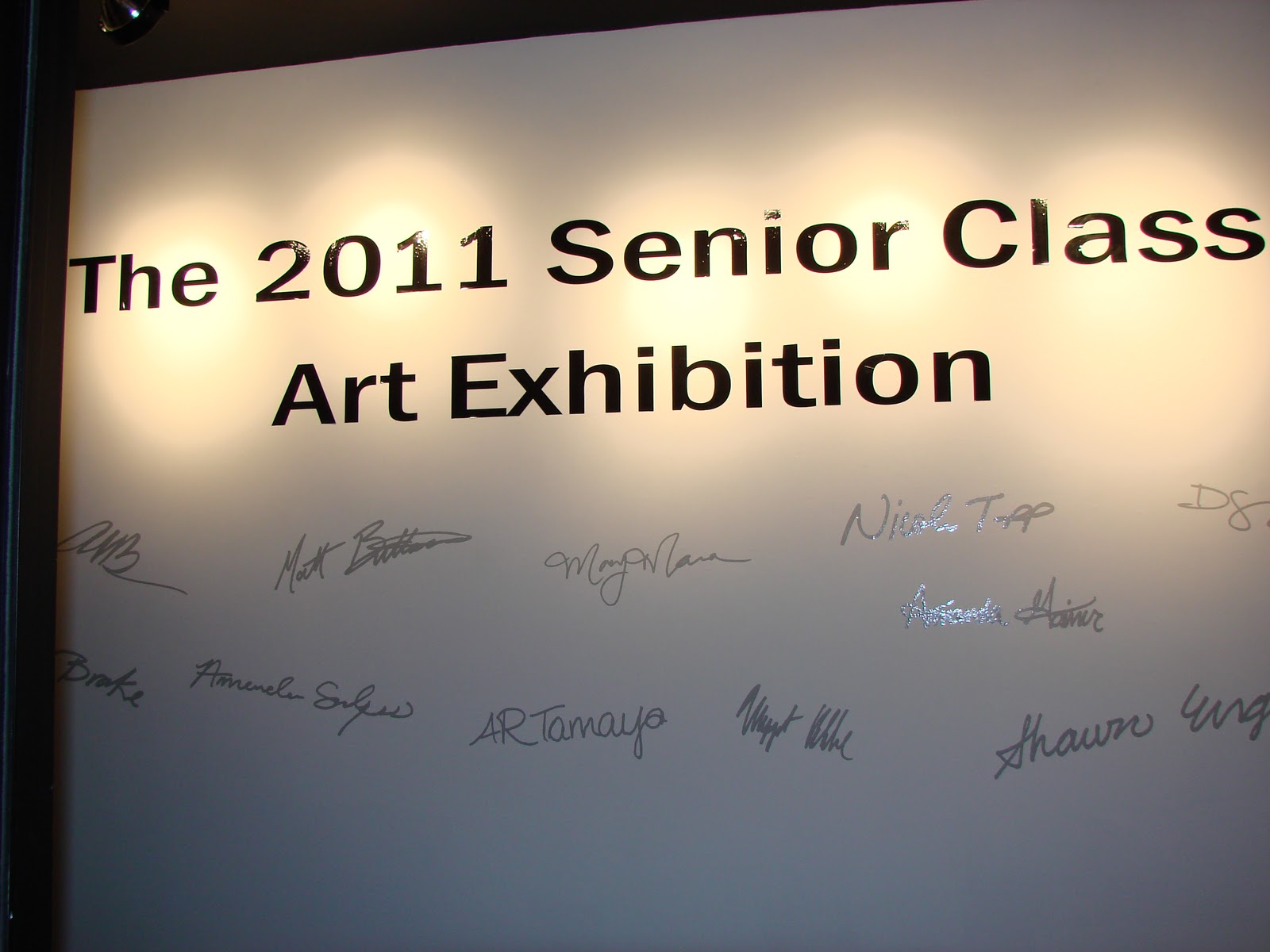
For those of you that might have missed it, here is a recap of the Baldwin-Wallace Senior Art Exhibition. The show is put together by the graduating seniors of the art department and represents their finest work. This year there were 11 seniors and the show ran from February 21- March 25 with a reception scheduled for Friday, February 25. However, a massive snowstorm rolled in the night before the reception, so it was rescheduled for Friday, March 18. Despite the cancellation, there was a great turnout at the show with many friends, family members, and faculty in attendance.
My pieces for the show included a series of 5 digital photographs displayed in lace stencilled frames. I also presented a necklace hanging in a frame painted to match my picture frames. The necklace was created as a tribute to my good friend Sarah. She was killed in a car accident last year, and the necklace represents the accident and the process of coping with such an unexpected loss.
Saturday, April 2, 2011
New Dyed Yarn
I recently dyed two more skeins of yarn using Kool-Aid. (See my previous post for information about the dyeing process.) The first skein started as white 100% wool and was dyed using Strawberry, Orange, Lime, and Lemonade. The result is a bright, tropical, tutti-frutti kind of color.
The second skein was a gray 100% wool skein dyed with Strawberry, Grape, Ice Blue Raspberry, and Pink Lemonade. Using gray yarn as a base created a muted color palette for the finished yarn. My next experiment will be using tan yarn as a base for dyeing. Any suggestions for color choices? What has been your favorite Kool-Aid dyed yarn so far?
Tuesday, March 29, 2011
Sewing With Recycled Materials
Three things you need to know about me and anything crafty:
1. I love recycling
2. I never throw anything away
3. I never turn down free stuff
That being said, I do a lot of sewing using recycled materials, stuff people have given me, and little scraps from other projects. I like to save things and wait for just the right project to use them on. Lately I had the opportunity to create a yoga mat bag for a friend. The yoga mat is very thick and heavy so the bag needed to be strong, and she wanted a pocket for cell phone, keys, etc. This is the same person that gave me several bags stuffed full of upholstery samples that a local furniture store was going to get rid of. So I sorted out a bunch of the upholstery samples that looked good together and went to town! I also just happened to have a navy blue shirt pocket that fit perfectly with this project. I lined the bag with cream colored canvas to make sure it was extra sturdy, and used an old pair of blue jeans to make the drawstring strap. (The only things I bought to make this project were the grommets to attach the handle, and the canvas.)
Pulling out my upholstery samples inspired me to create some small zippered pouches using the leftovers. I bought another bag of upholstery samples at a rummage sale a couple years ago. Most of the fabric is heavier cotton with fun prints. At this same rummage sale I picked up a big bag of assorted zippers (both the zippers and the fabric probably cost less than $2.) For these pouches I used bits of coordinating upholstery samples, some of that canvas I bought for the yoga bag as the pouch lining, and whatever zipper I could find. I also am using scraps of old button down shirts I had leftover from making purses.
This brings me to my shirt purses. I started making these a few years ago from my own pattern. Since then I have made at least 7 of them. The bags are slouchy hobo-style purses made from old shirts and upholstery samples with necktie handles. Not only are these bags recycled, they are reversible! I try to pick fabrics and neckties that go well together, and sometimes the button down shirts I choose are really awesome fabric... but really ugly shirts.
Speaking of ugly shirt fabric... this ipod case used to be a ridiculous lime green plaid shirt. The inside is a scrap of green fleece, and the gray portion is from the leftovers after hemming some dress pants.
1. I love recycling
2. I never throw anything away
3. I never turn down free stuff
That being said, I do a lot of sewing using recycled materials, stuff people have given me, and little scraps from other projects. I like to save things and wait for just the right project to use them on. Lately I had the opportunity to create a yoga mat bag for a friend. The yoga mat is very thick and heavy so the bag needed to be strong, and she wanted a pocket for cell phone, keys, etc. This is the same person that gave me several bags stuffed full of upholstery samples that a local furniture store was going to get rid of. So I sorted out a bunch of the upholstery samples that looked good together and went to town! I also just happened to have a navy blue shirt pocket that fit perfectly with this project. I lined the bag with cream colored canvas to make sure it was extra sturdy, and used an old pair of blue jeans to make the drawstring strap. (The only things I bought to make this project were the grommets to attach the handle, and the canvas.)
Pulling out my upholstery samples inspired me to create some small zippered pouches using the leftovers. I bought another bag of upholstery samples at a rummage sale a couple years ago. Most of the fabric is heavier cotton with fun prints. At this same rummage sale I picked up a big bag of assorted zippers (both the zippers and the fabric probably cost less than $2.) For these pouches I used bits of coordinating upholstery samples, some of that canvas I bought for the yoga bag as the pouch lining, and whatever zipper I could find. I also am using scraps of old button down shirts I had leftover from making purses.
This brings me to my shirt purses. I started making these a few years ago from my own pattern. Since then I have made at least 7 of them. The bags are slouchy hobo-style purses made from old shirts and upholstery samples with necktie handles. Not only are these bags recycled, they are reversible! I try to pick fabrics and neckties that go well together, and sometimes the button down shirts I choose are really awesome fabric... but really ugly shirts.
Speaking of ugly shirt fabric... this ipod case used to be a ridiculous lime green plaid shirt. The inside is a scrap of green fleece, and the gray portion is from the leftovers after hemming some dress pants.
Subscribe to:
Posts (Atom)